
Conventional Cash-Out Refinance Guidelines
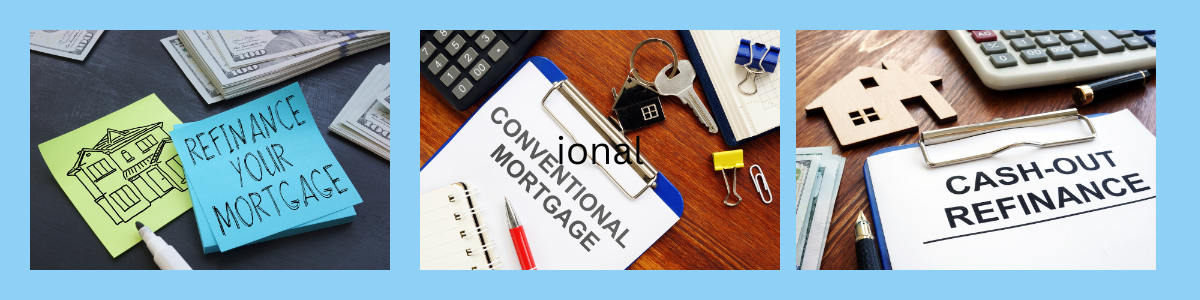
Conventional Cash-Out Refinance Guidelines: Accessing Your Home Equity
 For homeowners with substantial equity, a Conventional cash-out refinance can provide access to funds for debt consolidation, home improvements, emergency expenses, or other financial goals.
Unlike a rate-and-term refinance, a cash-out refinance replaces your current mortgage with a new loan that allows you to convert part of your home’s equity into cash.
However, this is not a “quick cash” transaction.
Lenders have underwriting guidelines which they follow that involves seasoning, ownership, occupancy, loan-to-value ratios, income verification, and documentation standards.
If you are considering tapping into your home’s equity, understanding the rules beforehand can save time, frustration, and potential loan denial.
What Is a Conventional Cash-Out Refinance?
A Conventional cash-out refinance allows eligible borrowers to:
- Pay off an existing mortgage
- Replace that mortgage with a new conventional loan
- Receive cash from available home equity
Common uses include:
- Home renovations
- Credit card debt consolidation
- Paying off student loans
- Emergency reserves
- Large planned expenses
This differs from a limited cash-out refinance, which allows only a minimal amount of cash back at closing.
Basic Eligibility Requirements
1. Mortgage Seasoning Requirement
If refinancing an existing first mortgage:
- The loan generally must be at least 12 months seasoned
- The seasoning period is measured from the original note date to the new loan note date
This prevents immediate equity stripping shortly after purchase.
2. Ownership Requirement
At least one borrower must generally:
- Have been on title for six months prior to closing
Exceptions may apply for:
- Inherited properties
- Divorce settlements
- Legal awards
- Approved ownership transfers
3. Occupancy Requirements
For owner-occupied primary residences:
- All borrowers must occupy the property as their principal residence
Occupancy classification affects:
- Maximum LTV-80%
- Pricing
- Reserve requirements
- Overall eligibility
4. Property Listing Restrictions
If the home was recently listed for sale:
- It must be removed from the market before loan closing
Lenders review this carefully to ensure the refinance is legitimate and not simply a delayed sale strategy.
Loan-to-Value (LTV) Guidelines
- Principal Residence- Owner Occupied Property- Maximum LTV is 80%-Max LTV – 1 unit dwelling for a cach-out refinance for Fixed Rate and ARM Loans.
- 2-4 Units Maximum LTV is 75% – Fixed Rate and ARM Loans
- Second Home Properties -Maximum LTV is 75%
- Investment Property-Maximum LTV is 75% for an 1 unit and
- 70% for 2-4 unit Investment Property
As guidelines change periodically, lenders follow current Fannie Mae eligibility matrices.
Debt-to-Income Ratio Requirements
Fannie Mae evaluates:
- Housing expense ratio
- Total debt obligations
- Income stability
Automated underwriting may approve:
- DTIs up to 45% or higher in some cases
If DTI exceeds standard thresholds:
- Additional reserve requirements may apply
Strong compensating factors help, such as:
- Excellent credit
- Stable employment
- Significant liquid reserves
- Low payment shock
Cash-Out Refinance Uses
Borrowers commonly use proceeds for:
- Debt Consolidation
Replacing high-interest revolving debt with mortgage financing.
- Home Improvements
Kitchen remodels, roofing, HVAC replacement, accessibility improvements.
- Student Loan Payoff
Fannie Mae permits student loan payoff in qualifying scenarios.
- Major Financial Planning
Medical costs, family needs, reserve building.
Mortgage Payment History Matters
Existing mortgages generally must be:
- Current at application
- Free from significant recent delinquencies
Late mortgage payments can create underwriting concerns and may affect approval.
Income and Asset Documentation
Expect lenders to verify
Employment
Recent pay stubs, W-2s, or income verification. *Most lenders use Automated Underwriting Systems: either Desktop Underwriter (DU) or Loan Prospector (LP). How your submitted information lines up within the auto mated underwriting will give the lender either approval suggestions or declines. The lender may have other specific underwriting condtions themselves.
Self-Employment Income
- Tax returns
- Profit & loss statements
- Business documentation
Assets
- Bank statements
- Retirement accounts
- Verification of liquid reserves- the amount of reserves depends upon the number of units, occupancy, credit score, and LTV. Normal 2 months for owner occupied. Greater for 2-4 units.
Accurate documentation remains critical.
Special Situations For Cash-Out Refinances
Divorce Buyouts
Cash-out refinancing may allow:
- Buyout of a former spouse’s ownership interest
Documentation is required.
Inherited Property
Ownership seasoning exceptions may apply when:
- Property is acquired through inheritance
Construction-to-Permanent Transactions
Certain structures may allow inclusion of:
- Construction costs
- Existing lot payoff
Cash-Out Refinance vs. Home Equity Loan
Some homeowners compare a cash-out refinance with a HELOC or home equity loan.
A cash-out refinance:
- Replaces your current mortgage parameters
- Creates one new payment
- May offer lower rates than unsecured debt
A home equity loan:
- Leaves your first mortgage intact
- Creates a second lien
- May preserve a low first mortgage rate
The right choice depends heavily on your current interest rate and financial goals.
Important Risks to Consider
Accessing equity is not free money.
Potential drawbacks often include:
- Higher total loan balance
- Closing costs
- Longer repayment term
- Reduced home equity cushion
- Risk of foreclosure if payments become unaffordable
Homeowners should carefully evaluate whether the financial benefit outweighs the long-term cost.
Final Thoughts
A Conventional cash-out refinance can be a powerful financial tool when used wisely. This is why underwriting guidelines exist and for a good reason. It is to help protect your financial interest in your home.
Borrowers should understand seasoning, title ownership, occupancy rules, LTV limits, documentation requirements, and affordability before applying.
When structured correctly, a cash-out refinance can create flexibility without undermining long-term financial stability.
Conventional Refinance Mortgages
Conventional Fixed Rate Refinance Mortgages
A Guide For Conventional Mortgages