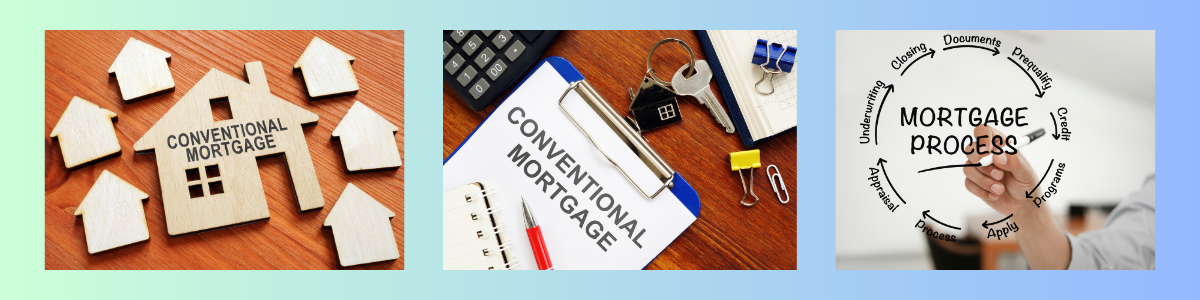
Conventional Mortgage Loans are one of the main products of most mortgage lenders. The guidelines are easy to comply with. Are you considering buying a home and wondering about the ins and outs of conventional mortgage loans? We are here to help.
Whether you’re a first-time homebuyer or an experienced investor, understanding the intricacies of conventional mortgages is crucial in making informed decisions about your real estate endeavors. In this guide, we’ll break down the definition of conventional mortgages, explain how they differ from other types of loans, and delve into the various factors that lenders consider when evaluating your eligibility.
Conventional mortgage loans offer borrowers flexibility, competitive pricing, and long‑term financial control. They reward strong credit and steady income with lower interest rates, fewer fees, and more options for down payments and loan terms.
Because a government agency doesn’t back them, conventional loans also give buyers more freedom, no upfront mortgage insurance premium, no strict property requirements, and the ability to remove PMI once equity reaches 20%.
Conventional private mortgage insurance (PMI) may typically be canceled at the borrower’s request once the loan reaches 80% loan-to-value, subject to servicer requirements, and is generally automatically terminated at 78% of the original value if payments are current.
For borrowers who want predictable costs, room to customize their loan, and the potential for long‑term savings, a conventional mortgage is often the most cost‑effective path to homeownership.
How do conventional mortgage loans work?
A conventional mortgage is a home loan financed by private lenders (banks, credit unions) rather than government programs like FHA or VA. They are the most common type of mortgage, often featuring lower interest rates for good credit, flexible terms (15–30 years), and required Private Mortgage Insurance (PMI) if putting down less than 20%.
These mortgages can be fixed-rate or adjustable-rate, with fixed-rate mortgages offering a stable interest rate over the entire loan term, while adjustable-rate mortgages have interest rates that can fluctuate over time.
Pros and cons of conventional mortgages
Like any financial product, conventional mortgages have their pros and cons. Let’s take a closer look at some of the advantages and disadvantages of choosing a conventional mortgage for your home purchase.
Pros of conventional mortgages
- Flexible loan options: Conventional mortgages offer a wide range of loan terms and down payment options, allowing borrowers to tailor the loan to their specific needs and financial situation.
- No mortgage insurance once you have 20% equity: Unlike FHA loans, conventional mortgages do not require mortgage insurance once the borrower has built up at least 20% equity in the property. This can result in significant savings over time.
- Ability to finance investment properties: Conventional mortgages are often the preferred choice for real estate investors, as they allow financing for non-owner-occupied properties.
Cons of conventional mortgages
- Strict eligibility requirements: Conventional mortgages typically require higher credit scores and larger down payments compared to government-backed loans. This can make it more difficult for some borrowers to qualify.
- Higher interest rates for borrowers with lower credit scores: Borrowers with lower credit scores may be offered higher interest rates on conventional mortgages, which can increase the overall cost of the loan.
- Potentially larger down payment: While conventional mortgages can be obtained with as little as 3% down payment, borrowers who can afford a larger down payment may have access to better interest rates and terms.
Conventional mortgage requirements
To qualify for a conventional mortgage, borrowers must meet certain requirements set by the lender. Here are some of the key factors that lenders consider when evaluating your eligibility:
- Credit score: Many lenders use 620 as a common conventional minimum credit score, though requirements vary by lender and loan program. However, borrowers with higher credit scores may have access to better interest rates and terms.
- Debt-to-income ratio (DTI): Lenders analyze your DTI, which is the percentage of your monthly income that goes toward paying off debts. Debt-to-income limits vary, but many conventional borrowers may qualify with DTIs above 43% when supported by automated underwriting approval and strong compensating factors. Most lenders prefer a DTI of 43% or lower.
- Down payment: While conventional mortgages can be obtained with as little as 3% down payment, borrowers who can afford a larger down payment may have access to better interest rates and terms. This can depend upon the specific lender’s qualifications, the product, and the borrower’s overall qualifying ability.
- Employment history and income stability: Lenders will review your employment history and income stability to ensure that you have a reliable source of income to make your mortgage payments. Typically, this will be a 24-month history, but with the Automated Underwriting System (DU), that may be less with good credit scores.
- Property appraisal: Lenders require a professional appraisal of the property to determine its value and ensure that it meets their requirements.
Conventional mortgage loan-rates and terms
Conventional mortgages offer borrowers the flexibility to choose from a variety of loan terms and interest rates. The interest rate you receive will depend on several factors, including your credit score, down payment, and loan term.
Conventional loans often offer competitive rates, particularly for borrowers with strong credit profiles. It’s important to shop around and compare rates from different lenders to ensure you’re getting the best possible rate for your conventional mortgage.
In terms of loan terms, borrowers can choose from 15-year, 20-year, and 30-year options. The loan term you choose will depend on your financial goals and budget. A shorter loan term will result in higher monthly payments but will allow you to pay off your mortgage faster and save on interest.
On the other hand, a longer loan term will result in lower monthly payments but will result in more interest paid over the life of the loan.
Different types of conventional mortgage loans
When it comes to conventional mortgages, there are several different types to choose from. Let’s take a closer look at some of the most common options:
- Fixed-rate mortgages: The interest rate on a fixed-rate mortgage remains the same throughout the entire loan term. This provides borrowers with stability and predictability, as their monthly payments will not change.
- Adjustable-rate mortgages (ARMs): Unlike fixed-rate mortgages, ARMs have interest rates that can fluctuate over time. Typically, ARMs offer a fixed interest rate foran initialperiod (such as 5, 7, or 10 years) and then adjust annually based on market conditions.
- Jumbo loans: Jumbo loans are conventional mortgages (non-conforming, loan amounts) that exceed the loan limits set by Fannie Mae and Freddie Mac. These loans are typically used for high-priced properties and have different eligibility requirements.
- Interest-only mortgages: Interest-only mortgage options exist but are generally limited to specialized loan programs (Interest-only loans are non-conforming products (non-QM) such as certain jumbo or non-qualified mortgage products.
Interest-only mortgages allow borrowers to make interest-only payments for a specified period (usually 3 to 10 years) before transitioning to regular principal and interest payments.
How to qualify for a conventional mortgage
To qualify for a conventional mortgage, it’s important to take the following steps:
- Check your credit score: Review your credit report and ensure that your credit score meets the lender’s requirements. If your credit score is low, take steps to improve it before applying for a mortgage.
- Save for a down payment: Conventional mortgages typically require a down payment of at least 3% to 20% of the home’s purchase price. Start saving early to ensure you have enough funds for the down payment.
- Pay off existing debts: Reduce your debt load and improve your debt-to-income ratio by paying off outstanding debts before applying for a mortgage.
- Gather necessary documents: Lenders will require various documents, including pay stubs, tax returns, bank statements, and proof of assets. Gather these documents in advance to streamline the application process.
- Get pre-approved: Consider getting pre-approved for a mortgage before house hunting. Pre-approval will give you a better idea of your budget and can make your offer more attractive to sellers.
Steps to apply for a conventional mortgage
Once you’ve prepared yourself to qualify for a conventional mortgage, follow these steps to apply:
- Research lenders: Shop around and compare rates from different lenders to find the best fit for your needs. Consider factors such as interest rates, fees, and customer reviews.
- Submit an application: Complete the lender’s application form and provide all the necessary documentation. Be prepared to answer questions about your income, employment, assets, and debts.
- Undergo the underwriting process: The lender will review your application and supporting documents to assess your eligibility. This process may involve verifying your income, employment, and assets.
- Receive a loan estimate: Once your application is reviewed, the lender will provide you with a loan estimate that outlines the terms of the mortgage, including the interest rate, monthly payments, and closing costs.
- Complete the appraisal and inspection: The lender will require a professional appraisal of the property to determine its value and ensure it meets their requirements. You may also choose to have a home inspection done to identify any potential issues with the property.
- Finalize the loan: If everything checks out, you’ll receive a commitment letter from the lender, indicating their willingness to fund the mortgage. Review the terms and conditions carefully before signing the loan documents.
- Close on the property: Finally, you’ll attend the closing meeting, where you’ll sign the necessary paperwork, pay any remaining closing costs, and officially take ownership of the property.
Tips for getting the best conventional mortgage rates
Securing the best interest rate on your conventional mortgage can save you thousands of dollars over the life of the loan. Here are some tips to help you get the best possible rate:
- Improve your credit score: Take steps to improve your credit score by paying off outstanding debts, avoiding late payments, and keeping your credit utilization ratio low.
- Save for a larger down payment: A larger down payment can help you qualify for better interest rates and terms. Aim for a down payment of at least 20% to avoid mortgage insurance and potentially secure a lower interest rate.
- Shop around and compare rates: Don’t settle for the first offer you receive. Shop around and compare rates from different lenders to find the best deal. Consider both interest rates and closing costs.
- Consider a shorter loan term: Shorter loan terms typically come with lower interest rates. If you can afford higher monthly payments, consider opting for a 15-year or 20-year loan term.
- Pay attention to discount points: Discount points are fees paid upfront to lower the interest rate on the mortgage. Calculate whether paying discount points makes financial sense based on your specific situation.
- Maintain stable employment and income: Lenders prefer borrowers with stable employment and income. Avoid changing jobs or taking on new debt during the mortgage application process.
Common misconceptions about conventional mortgages ˜will talk about this later…
Conclusion
Understanding the world of conventional mortgages is essential for anyone looking to buy a home. By familiarizing yourself with how these mortgages work, the pros and cons, the eligibility requirements, and the different types available, you can make informed decisions and secure the best possible interest rates.
Remember to check your credit score, save for a down payment, and compare rates from different lenders to ensure you’re getting the best deal.
The Ultimate Checklist For Buying a Home