

Understanding financial statements or reading financial statements involves analyzing three core reports: the Income Statement (profitability), the Balance Sheet (financial position), and the Cash Flow Statement (liquidity). Together, these documents reveal exactly how a business operates, manages its money, and sustains its growth.
The Three Core Financial Statements
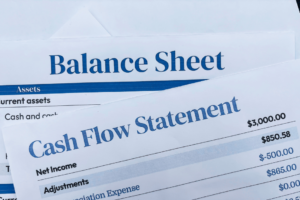
- The Income Statement (The Movie)
This statement tracks a company’s revenues and expenses over a specific period (like a quarter or a year) to determine overall profitability.
- Cost of Goods Sold (COGS): The direct costs attributable to the production of the goods or services sold.
- Gross Profit: Revenue minus COGS. It shows how efficiently a company creates its products.
- Operating Expenses: The costs to run the business (e.g., rent, marketing, payroll).
Net Income (Bottom Line): The total profit (or loss) after all expenses, taxes, and interest have been deducted from revenue.
- The Balance Sheet (The Snapshot)
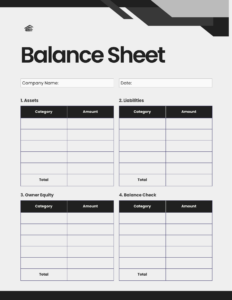
The balance sheet provides a picture of a company’s assets, liabilities, and shareholders’ equity as a single, specific point in time. It is governed by the core equation: Assets = Liabilities + Owners’ Equity.
- Assets: What the company owns that holds economic value (e.g., cash, inventory, property, equipment). These are usually listed in order of liquidity.
- Liabilities: What the company owes to others (e.g., debt, accounts payable, taxes).
- Shareholders’ Equity: The money that would belong to the owners if all assets were liquidated and all liabilities were paid off.
- The Cash Flow Statement (The Movie about Cash)
Revenue doesn’t always mean that you have cash, and the statement of cash flows is a good example of why that is true. Sales on credit, sales that have not been paid yet, as well as work being performed and not billed yet, won’t appear on the statement of cash flows. This statement only shows the money and money that has gone out during the period counted.
While the income statement uses accrual accounting (recording revenues when earned rather than when cash is received), the cash flow statement tracks the actual movement of cash in and out of the business.
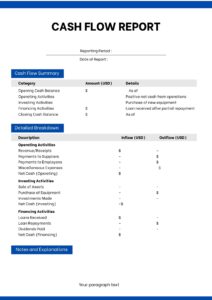
- Operating Activities: Cash generated or lost through core business operations.
- Investing Activities: Cash used to buy or sell long-term assets, such as property, equipment, or investments.
- Financing Activities: Cash flow related to borrowing money, repaying debt, issuing stock, or paying dividends.
How to Analyze the Data
Rather than just memorizing numbers, you should look for the story behind the figures:
- Check the Trends: Compare these statements over multiple years to see if revenues, profits, and cash reserves are growing or shrinking.
- Calculate Ratios: Use figures from the statements to evaluate the business. For example, determine the Net Profit Margin (Net Income ÷ Revenue) to see how much profit is kept for every dollar earned.
- Read the Footnotes: The disclosures contain crucial information regarding accounting assumptions, ongoing lawsuits, and hidden risks.
What To Know When Investing
When you get involved with investing, it’s important to understand some basic information about how to read and understand financial statements – especially if you are a do-it-yourself type. Knowing what they mean can help you make sound decisions about your investment choices.
Learning about each of these statements is essential to your financial future so that you can invest properly. You’ll want to see all of these statements for any business that you want to invest in. Taken all together, you can assess the health of any business. For publicly traded companies, all of these statements are available for public view.
What to Look For on the Statements
What you want to look for are financials that make sense, plus you want to see a profitable business that has room for growth. Some key things to look for are:
- Poor Cash Flows – If a business has poor cash flows, even if they are earning money overall, this can indicate some trouble with collecting, which can indicate many problems. Very good business ideas fail all the time due to bad cash flow.
- High Dividends – On the statement of retained earnings, if a business is paying out high dividends even if it’s not that profitable, that is cause for concern. They are likely trying to attract investors because they are short on funds.
- Footnotes – Often, you can get a lot more information from reading the footnotes on any financial document than you can from looking at the document. Read all the footnotes so that you can find out the information they may not want you to notice.
Once you learn what to see on each statement, you’ll have no trouble looking at any business and knowing its situation. From this, you will be able to make a good choice in a matter of an hour or two per business.
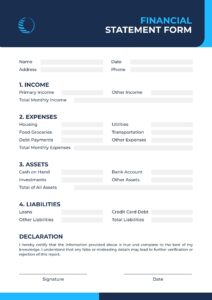
Financial Statement-Income Form Example
Balance Sheet Form Example
Cash Flow Form Example
Why Passive Income Is Important: It Provides Long-term Financial Stability
Financial Strategies Explained: Smart Ways to Build Security, Wealth, and Financial Freedom
Five Steps for Understanding Financial Statements