

10 Golden Rules of Personal Finance-Build Wealth & Stay Financially Secure
Managing money wisely isn’t about luck—it’s about following time-tested financial principles. Whether you’re just starting your financial journey or looking to improve your habits, these golden rules of personal finance will help you build wealth, avoid debt, and create long-term financial security.
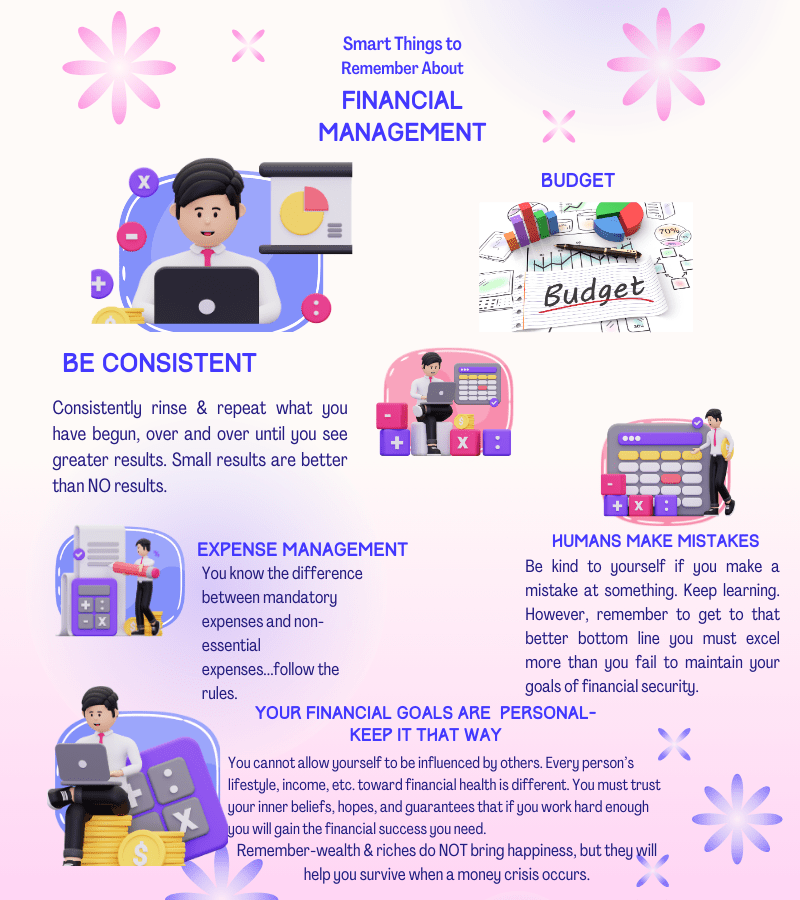
Some Rules To Follow…
1. Spend Less Than You Earn
The #1 rule of financial success is simple: If you spend more than you earn, you’ll always be in debt. Living within your means allows you to save, invest, and build financial freedom.
Action Steps:
Track your income and expenses: What are your expenses related to your income? Yes, we are talking about debt-to-income ratio. If your expenses are high, you have less money to save for essential things that could come to life. That unforeseen water pipe that rusts and breaks, the bad tires go flat on your vehicles, and you have an accident and are off work without full salary status. So much more can happen. Be conscious of all things that can occur.
Create a budget to ensure you’re spending wisely: When you have a budget, you keep it handy to review and make necessary changes. Budgeting is not hard, it just takes a commitment and desire to make your financial well-being paramount. You can read our post -A Budget Guide to Control Your Finance
Cut unnecessary expenses and focus on needs over wants: What you need is far more important than what you want, and you know that upfront. This is just a reminder.
- Adequate clothing is essential for members of the family who have employment. However, be your own fashion icon as you certainly do not have to copy what someone else wears.
- The kids (if applicable) need suitable clothing for attending nursery, pre-school, or higher education. They must have school accessories necessary for their classes and learning and this can’t be eliminated.
- Being wise you know that adequate health and life insurance for your family is necessary.
- Home insurance is required if you own a home, or rental insurance for your furniture, etc. if you rent.
- Having a savings account is necessary if you want to achieve financial security.
2. Save & Invest Early and Consistently, but wisely…
The earlier you start saving, the more you can benefit from compound interest—where your money earns money over time. Even small amounts saved regularly can grow into substantial wealth.
Action Steps:
Invest Wisely & Diversify
Keeping all your money in a savings account won’t help it grow. Investing allows your money to work for you—but be smart about where you put it.
- Diversify: Don’t put all your money in one investment type.
- Invest in index funds, stocks, bonds, and real estate.
- Take advantage of employer 401(k) matches—it’s free money!
- Save at least 20% of your income (adjust based on your situation). If you cannot do this initially, start smaller and then go higher. Any amount will be better than nothing.
- Open a high-yield savings account for short-term savings.
- Invest in stocks, index funds, or retirement accounts for long-term growth. If and when you decide to do this, do not start this without proper guidance. Get adequate professional help so that you do not lose your money. There are numerous financial advisers and they can give you what they know and have learned through their career.
3. Avoid High-Interest Debt (Especially Credit Cards)
Not all debt is bad, but high-interest debt (like credit cards and payday loans) can destroy wealth. If you’re paying 20%+ interest on debt, it’s nearly impossible to get ahead financially.
Action Steps:
- Pay off credit card balances in full each month. This is one of the best habits you can cultivate. This means that you will probably not overspend so you have sufficient funds each month to pay it off.
- Avoid using loans for unnecessary expenses. When and if you make a loan for unnecessary expenses, you are cutting your own financial throat. Many times these loans are at a higher interest rate and they also make your debt to income go higher. If you are not controlled, you may keep getting this load that will devastate your financial position.
- If you’re in debt, focus on high-interest debt first (Avalanche Method). This is simple when you focus on paying off your credit cards, loans, etc.. Start paying as much as you can to the balances with the higher interest rates. However, you must make sure you are not mission the minimum required payments on all cards. It is imperative that you pay as much as possible on each card as you will get them paid off much quicker and you are saving money when you do.
4. Build an Emergency Fund
An emergency fund protects you from financial surprises—job loss, medical bills, car repairs, etc. Without it, you may have to rely on credit cards or loans to cover unexpected expenses.
Action Steps:
- Save 3–6 months’ worth of living expenses in a separate account.
- Start with a small goal (e.g., $500), then build over time.
- Keep emergency savings liquid (easily accessible, like in a savings account).
5. Understanding Needs vs. Wants
One of the biggest financial mistakes people make is confusing wants with needs. Needs are essential (food, housing, utilities), while wants are optional (designer clothes, eating out, luxury cars).
Action Steps:
- Use the 50/30/20 Rule: 50% needs, 30% wants, 20% savings.
- Pause before impulse spending—ask, “Do I really need this?”
- Prioritize experiences and financial security over material possessions.
6. Pay Yourself First
If you wait until the end of the month to save, you might have nothing left. Instead, pay yourself first—automate savings before spending on anything else.
Action Steps:
- Set up automatic transfers to your savings & retirement accounts.
- Treat savings like a mandatory bill—not an afterthought.
- Aim for at least 20% of your income in savings.
7. Plan for Retirement Early
What is the biggest mistake people make? Waiting too long to save for retirement. Even if retirement is 30+ years away, starting now makes it significantly easier to build a comfortable future.
Action Steps:
- Contribute to a 401(k), IRA, or Roth IRA. If you do not take advantage of your employer 401K plan, you are throwing away $$$. This is added income and when invested correctly, it will grow swiftly.
- Increase your savings rate as your income grows.
- Use a retirement calculator to estimate how much you’ll need.
8. Track & Adjust Your Financial Plan
Your financial goals will change over time, and your plan should adapt. Regularly review your finances to stay on track.
Action Steps:
- Check your budget, savings, and investments monthly.
- Adjust spending based on life changes (new job, family, home purchase).
- Set new goals—financial success is a lifelong journey!
9. Increase Your Income Over Time
Cutting expenses helps, but earning more money is a game-changer. Instead of focusing only on saving, look for ways to grow your income.
Action Steps:
- Ask for a raise or promotion at work.
- Start a side hustle or freelance business.
- Invest in education & skills to improve your earning potential.
10. Remember That Money Does Not Buy Happiness
- Happiness comes from peace within and you will not have peace within unless you have performed, saved, and built your financial wealth with integrity, professional ethics, authenticity, and being a man or woman who has compassion for others.
Final Thoughts: Master Your Money, Build Your Future
Personal finance isn’t about being rich—it’s about controlling your money and future. By following these golden rules, you can avoid debt, grow wealth, and live financially stress-free.
💡 What’s the #1 personal finance rule you live by? Let me know in the comments!e Read this post: Saving Money When Inflation is High
Additional References: 10 Golden Rules of Personal Finance That Everyone Should Know