
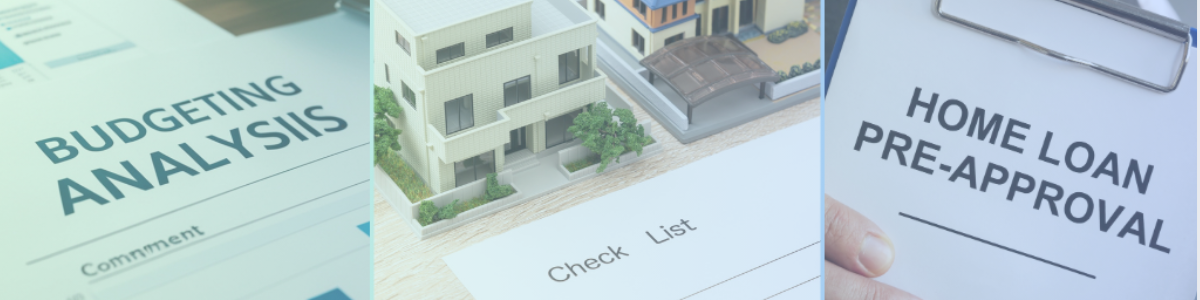
The Ultimate Checklist for Buying a Home is going to save you valuable time and money…
Buying a home can be an exciting but overwhelming experience. With so many steps involved, it’s easy to feel stressed and unsure of where to start. But with this comprehensive checklist, you can feel confident that you won’t miss a single important step in the home-buying process. So grab a pen and get ready to start your happy house hunting journey!
Determine your budget and get pre-approved for a mortgage
Before you start looking at homes, it’s important to determine your budget and get pre-approval for a mortgage. This will give you a clear idea of how much you can afford to spend on a home and will also make you a more attractive buyer to sellers.
Start by reviewing your finances and determining how much you can comfortably afford to spend on a monthly mortgage payment. This is where you should look at your credit report and see your credit history.
It is important to make sure all of your debts are listed on your credit report. You must tell the mortgage professional about all debts that you pay each month if they are not listed on the credit report.
Then, shop around for mortgage lenders and get pre-approved for a loan. This will give you a clear idea of how much you can borrow and will also help you narrow down your search to homes that are within your budget.
Pre-Approval For a Mortgage
Pre-approval means that your credit is okay from the information you have provided to the lender (it must be accurate). It also means you have sufficient assets for the down payment and closing costs.
Normally, the only verification that is missing for pre-approval is the property evaluation. So, once you find the property and sign the contract, the appraisal is completed and submitted, and the final underwriting is completed.
There is a difference between a preliminary mortgage approval and a pre-approval for a mortgage; you can find these explained in the links here. Pre-qualification Mortgage Steps vs. Pre-approval Steps and Guide
Research neighborhoods and find a real estate agent
Once you have determined your budget and gotten pre-approved for a mortgage, it’s time to start researching neighborhoods and finding a real estate agent. Look for neighborhoods that fit your lifestyle and have the amenities you desire, such as good schools, parks, and shopping.
Then, find a reputable real estate agent who knows the area well and can help you find homes that meet your criteria. A good agent will also be able to negotiate on your behalf and guide you through the home-buying process.
It is often important to have your own Realtor separate from the seller of the property.
Attend open houses and schedule private showings
Once you have narrowed down your list of potential homes, it’s time to attend open houses and schedule private showings. This will give you a chance to see the homes in person and get a better feel for the layout and overall condition.
During the showing, be sure to ask questions about the home’s history, any recent renovations or repairs, and any potential issues that may need to be addressed. Take notes and pictures to help you remember each home and compare them later.
Make an offer and negotiate the terms of the sale
Once you have found the perfect home, it’s time to make an offer. This is where you will negotiate the terms of the sale, including the price (closing costs paid by seller-interest party contributions), closing date, and any contingencies.
Interested-party contributions are limited per the GSEs, Fannie, and Freddie, as most lenders use their guidelines when making loans.
You can get minimum down payments from flexible sources like FHA (3.5%), VA/USDA (0%), and conventional loans (as low as 3%), with funds often coming from gifts, grants, or down payment assistance (DPA) programs, but lenders check for seasoned funds. Fannie Mae’s HomeReady and Freddie Mac’s Home Possible allow 3-5% down with no personal contribution requirement if using flexible sources, while VA/USDA loans offer 0% down for eligible buyers in specific areas or with military service.
Home Loan Guidelines Table (Purchase)
| Loan Type | Minimum Down Payment | Max LTV (Purchase) | Mortgage Insurance / Fees | DTI Guidelines (Typical / Rule-of-Thumb) |
|---|---|---|---|---|
| Conventional (Fannie/Freddie) | 3% (many first-time/eligible programs) | 97% (common low-down-payment option) | PMI required if LTV > 80% (can usually be removed later); MI coverage depends on LTV | Up to 50% with DU (automated); 45% manual approval |
| FHA | 3.5% (standard minimum investment) | 96.5% (with 3.5% down) | Upfront MIP 1.75% + annual MIP (paid monthly) | 31% housing / 43% total (higher possible with compensating factors/AUS) |
| VA | 0% (often) | 100% (plus financed funding fee) | No monthly mortgage insurance; VA funding fee (one-time, may be financed, some exempt) | 41% is key guide, but DTI > 41% possible with strong residual income/compensating factors |
| USDA (Guaranteed Rural Housing) | 0% | 100% (up to appraised value; guarantee fees may be financed) | Guarantee fee structure (upfront + annual fee) | 29% housing / 41% total (can adjust with eligible compensating factors) |
Notes:
- Conventional 3% down usually means specific eligible programs (often for first-time buyers).
- PMI for Conventional loans is generally cancelable once you reach sufficient equity (80.00% LTV). FHA MIP can last much longer and may require refinancing to remove.
- DTI limits are not always a single number—Conventional is heavily automated (AUS-driven), VA focuses on residual income, and USDA uses the 29/41 framework as a baseline.
- Actual approvals can vary by lender overlays, credit score, property type, and automated underwriting findings.
Caution: re-this prior Operations Manager, Loan Officer, and Underwriter- if the seller is going to pay any of the allowable closing costs, it will be added to their sale price, bottom line.
Your real estate agent should help you with this process and ensure you get a fair deal. Be prepared to negotiate and don’t be afraid to walk away if the terms are not in your favor.
Remember, buying a home is a big investment, and you want to make sure you are getting the best deal possible.
Get a home inspection and review the results
Before finalizing the purchase of your new home, it’s important to get a home inspection. This will help you identify any potential issues with the property and give you an idea of what repairs or maintenance may be needed in the future.
Your real estate agent can recommend a reputable inspector, or you can find one on your own. Once the inspection is complete, review the results carefully and discuss any concerns with your agent. You may be able to negotiate repairs or a lower price based on the findings of the inspection.