

Financial Literacy Explained: What It Is, Why It Matters, and How to Build It
Financial literacy is the ability to understand and apply financial skills, knowledge, and behaviors that enable individuals to make informed and effective decisions about money. The terms financial literacy, financial education, and financial expertise are often used interchangeably, as they all relate to understanding how money works in everyday life.
At its core, financial literacy is not about being an expert or having perfect finances. It is about developing awareness, building confidence, and learning how financial decisions made today affect both present stability and future security.
Why Financial Literacy Matters
Financial literacy matters because money influences nearly every aspect of daily life. From paying household expenses and managing debt to saving for emergencies and planning for retirement, financial decisions are constant and unavoidable.
Without a basic understanding of how money works, individuals are more likely to experience financial stress, accumulate high-cost debt, and struggle to reach long-term goals.
Being financially literate allows people to understand the consequences of their financial choices. Instead of reacting to financial pressure or relying on guesswork, they are better equipped to evaluate options, recognize risks, and make informed decisions.
This is especially important in a financial environment where credit is easily accessible and financial products can be complex or misleading.
Financial literacy also supports financial independence and stability. Individuals who understand budgeting, saving, credit, and interest are more prepared to handle unexpected expenses, avoid financial pitfalls, and maintain control over their money. Even modest improvements in financial knowledge can lead to healthier habits and greater confidence.
Ultimately, financial literacy empowers individuals to take ownership of their financial future. It promotes proactive planning, thoughtful goal-setting, and responsible decision-making at every stage of life.
Why It’s Important
- Empowerment: Provides you with the confidence to manage your money effectively.
- Stability: Helps build financial resilience and security for unexpected events.
- Goal Achievement: Enables you to plan and reach important life goals.
- Avoid Pitfalls: Reduce the risk of debt, financial stress, and poor decisions.
When Financial Literacy Begins
Financial literacy does not begin at a specific age, nor does it require a particular income level. For some people, it starts early through family guidance or education. For others, it begins later in life, often triggered by major life events such as starting a new job, purchasing a home, managing debt, or preparing for retirement.
It is never too late to improve financial literacy. The process is gradual, and progress matters far more than perfection. Financial literacy grows through experience, learning, and consistent effort. Each step forward—no matter how small—strengthens financial awareness and capability.
Key Skills and Concepts of Financial Literacy
Financial literacy is built on several core skills and concepts that work together to support sound financial decision-making. Each area serves a distinct purpose, yet they are closely connected and collectively shape long-term financial health.
Budgeting and Spending
Budgeting is the foundation of financial literacy. It involves tracking income and expenses to understand where money is going and to ensure spending aligns with financial priorities. Effective budgeting helps individuals live within their means, reduce wasteful spending, and make intentional choices about how money is used.
Understanding spending patterns also creates awareness, which is essential for making adjustments and avoiding unnecessary debt.
Saving and Investing
Saving and investing focus on preparing for both short-term needs and long-term financial goals. Saving includes setting aside money for emergencies and planned expenses, while investing involves growing money over time through retirement accounts and other investment tools.
Together, saving and investing support financial security, help manage risk, and allow individuals to benefit from long-term growth.
Debt Management
Debt management involves understanding how borrowing works and using credit responsibly. This includes recognizing interest rates, repayment terms, and the long-term cost of debt. Financially literate individuals understand when debt can be useful and when it becomes harmful.
Effective debt management protects credit health, reduces financial strain, and increases financial flexibility.
Financial Planning
Financial planning connects daily financial decisions with long-term objectives. It involves creating strategies for goals such as homeownership, education, retirement, or major life transitions. A well-thought-out financial plan helps individuals make consistent decisions that support both current needs and future aspirations.
Understanding Financial Principles
Financial literacy also requires understanding fundamental financial principles such as compound interest and the time value of money. These concepts explain how money grows—or loses value—over time, depending on how it is managed.
Understanding these principles highlights the importance of saving early, investing wisely, and managing debt carefully, as small decisions can have significant long-term effects.
How Financial Literacy Impacts Future Financial Health
Financial literacy plays a direct role in long-term financial health. Individuals who understand financial basics are better prepared to manage uncertainty, avoid costly mistakes, and adapt to changing circumstances.
Improved financial literacy often leads to:
- Reduced financial stress
- Stronger credit profiles
- Better borrowing decisions
- Increased savings and preparedness
- Greater confidence in financial planning
Over time, informed decisions compound, creating stability and resilience even during economic challenges.
Financial Literacy and Smart Financial Goals
Financial literacy provides the framework needed to set realistic and meaningful financial goals. Rather than vague intentions, informed individuals are more likely to create structured goals with clear timelines and priorities.
Examples include:
- Short-term goals such as building an emergency fund or reducing debt
- Mid-term goals like saving for a home or education
- Long-term goals, including retirement planning and wealth preservation
Financial knowledge allows individuals to align goals with available resources and make adjustments as circumstances change.
What to Do: Positive Financial Literacy Practices
Practicing financial literacy involves consistent habits and informed actions, including:
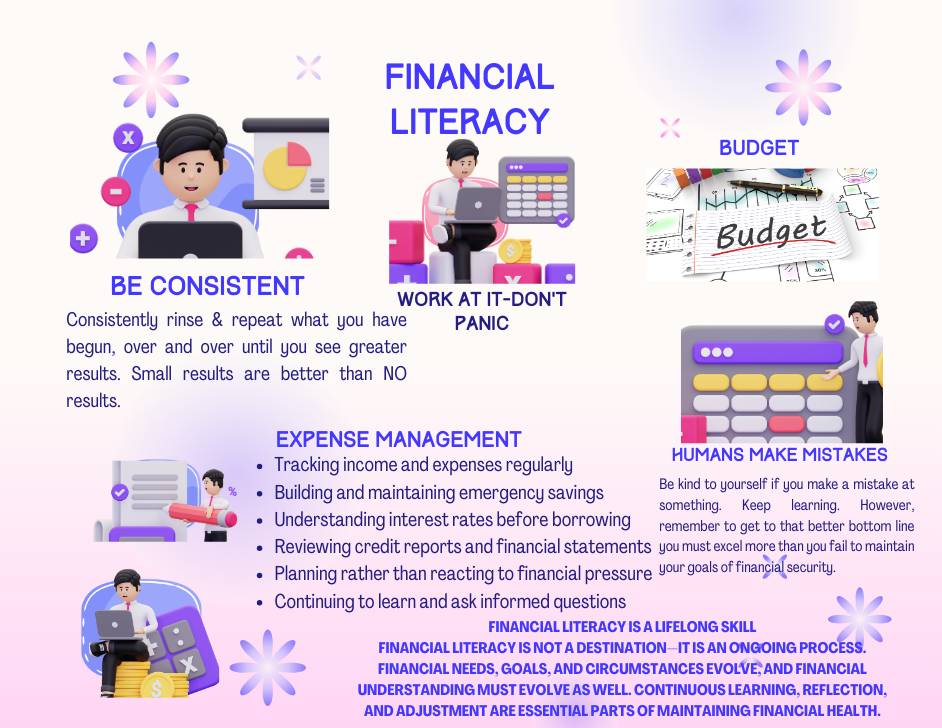
- Tracking income and expenses regularly
- Building and maintaining emergency savings
- Understanding interest rates before borrowing
- Reviewing credit reports and financial statements
- Planning rather than reacting to financial pressure
- Continuing to learn and ask informed questions
- Take courses from resources like Khan Academy.
These practices support long-term stability and help individuals remain proactive rather than reactive.
What Not to Do: Common Financial Literacy Mistakes
A lack of financial literacy often leads to avoidable mistakes, such as:
- Ignoring credit reports and financial obligations
- Relying on high-interest debt for everyday expenses
- Making emotional or impulsive financial decisions
- Following financial advice without understanding it
- Delaying financial education due to fear or overwhelm
Avoiding these behaviors is just as important as building positive habits.
Financial Literacy Is a Lifelong Skill
Financial literacy is not a destination—it is an ongoing process. Financial needs, goals, and circumstances evolve, and financial understanding must evolve as well. Continuous learning, reflection, and adjustment are essential parts of maintaining financial health.
By developing financial literacy, individuals gain more than financial knowledge. They gain confidence, control, and the ability to make decisions that support long-term well-being. Small, consistent improvements can lead to meaningful change and a more secure financial future.
Of course, here is a concise, polished conclusion summary you can use at the end of the article or as a closing wrap-up. It reinforces value without sounding salesy.
Conclusion: Building Financial Literacy for a Stronger Future
Financial literacy is the foundation of sound money management and long-term financial health. It equips individuals with the knowledge, skills, and confidence needed to make informed decisions about spending, saving, borrowing, and planning for the future. Rather than relying on guesswork or reacting to financial pressure, financially literate individuals are better prepared to navigate life’s financial challenges with clarity and control.
The journey toward financial literacy does not require perfection or advanced expertise. It begins with awareness, grows through consistent learning, and strengthens through intentional habits. Over time, even small improvements in financial understanding can lead to greater stability, smarter financial goals, and increased confidence.
By committing to financial literacy as a lifelong skill, individuals place themselves in a stronger position to protect their financial well-being, reduce stress, and create opportunities for a more secure and balanced future.